
"Colombian MAM"
200 article(s) found

The central and eastern mountains of the Colombian coffee producing area
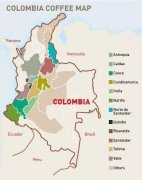
The main production areas of Colombia are in the central and eastern mountains. This also reflects the excellent quality of the country from one aspect. Coffee is classified as top grade (Suprem, moderate granule and excellent fruit). Colombian coffee is often described as having the highest quality coffee in Medellin, with a top grade (Supremo). These three areas are true to heart.

Fine coffee origin introduction: Colombian boutique coffee beans Colombian coffee characteristics Columbia
It is the second largest coffee producer in the world, accounting for about 12% of the world's annual output, which is much lower than that of Brazil, which is 30% to 35%, but most of them are high-quality mountain-washed beans. Central Colombia is divided into valleys by three north-south longitudinal mountains, of which the central and eastern mountains are the main producers of coffee. The coffee here is named after the distribution market, and it is beautiful in the Central Mountains.

Brief introduction of Colombian Fine Coffee beans taste characteristics of Colombian Fine Coffee
It is the second largest coffee producer in the world, accounting for about 12% of the world's annual output, which is much lower than that of Brazil, which is 30% to 35%, but most of them are high-quality mountain-washed beans. Central Colombia is divided into valleys by three north-south longitudinal mountains, of which the central and eastern mountains are the main producers of coffee. The coffee here is named after the distribution market, and it is beautiful in the Central Mountains.

A brief introduction to the market price of Colombian boutique coffee beans with mild taste
But Bucaramanca in the northeastern province of Santander is known for its low sour and bitter flavor, similar to Indonesia's Mantenin flavor, probably related to an altitude of only 960m (low altitude, low acidity, always good). Bucamanca's beans are very interesting, unlike the familiar Colombian flavor. Although they belong to soft beans, they are full-bodied and do not taste like [MAM] beans.

Which brand of Colombian coffee is better? the characteristics of Colombian coffee
There are many kinds of coffee brands in Colombia. Colombian coffee growers can sell all their products to the Coffee Management Association at an official low price, or to exporters, who may offer higher prices or no bids at all. In fact, the Coffee Management Association (FNC) controls the export of large coffee beans to Europe, while coffee exports to the United States are mainly
Columbia Coffee History, Climate, Environment, Coffee Flavor
Colombian coffee beans grow at high altitudes and are carefully cared for in the shade of banana and rubber trees. This kind of coffee is one of the best in the world. Rich, mellow, perfectly balanced. Colombia's arid mountains and well-drained, fertile volcanic soil provide ideal conditions for growing quality coffee. Coffee in Colombia is mainly grown in two regions, one

Colombia Coffee Plantation with Green Tea Flavor
Lumbia is rich in topography, low in latitude and high in altitude, and has excellent conditions for fine coffee growth. Costa Rica's coffee region is located between 3 and 8 degrees north latitude, belonging to the low latitude coffee belt, which can be harvested twice a year, and ripe coffee can be harvested almost every month from south to north. Large, entrepreneurial coffee farms are located in the central and northern regions and are the main commercial bean producing areas, including the historic plum in the central region.

Colombian coffee has a unique geographical environment Colombian boutique coffee beans Colombian coffee
Costa Rican coffee production has been in a tug of war with Vietnam in recent years, but two ○○ three to two ⊙⊙ was squeezed out by Vietnam in seven years, ranking the third largest producer in the world. Costa Rica is determined to regain its position as the second place, and the second ○○ has worked out a plan to increase production in six years, and is determined to increase its annual output from more than 12 million bags to more than 16 million bags within five years, and win back the world runner-up. In the past, Costa Rica paid more attention to the commercial soybean market.

Colombian coffee exports are mainly sold to that place.
Colombia is fortunate to have Atlantic and Pacific ports, which helps to reduce the cost of transporting coffee, which is the only country in South America. The main production areas of Colombia are in the central and eastern mountains. The most important plantations along the central mountains are located in Medellin, Armenia and Man.

Colombian coffee producing area Colombian coffee elegant demeanor Colombian coffee characteristics brother
Coffee was first introduced to Colombia in 1808 when it was brought by a priest from the French Antilles via Venezuela. Today the country is the second largest producer after Brazil. Colombian coffee origin: Colombian coffee is one of the few original coffee sold in the world under the name of the country. In terms of quality, it can't get any other coffee.

Introduction to the Hope Manor in the Coffee producing area of the Central Mountains in central Colombia
Three main varieties of the Central Mountains of central Colombia. Medellin coffee is full-bodied, rich in taste, meticulous and sour with blending. The concentration and acidity of Armenia and Manizale coffee were lower. These three varieties are called MAM in the coffee market. Bogota and Bucaramanga are produced in Bogota, the capital of Colombia, in the eastern mountains that surround Colombia. Bogota coffee quilt

Basic knowledge of boutique coffee Colombian coffee producing area
[Columbia (Colombia) Coffee] is the second largest producer of coffee in the world, accounting for about 12% of the world's annual output, although far lower than the first Brazil's 30% to 35%, but most are high-quality mountain-washed beans. Central Colombia is divided into valleys by three north-south longitudinal mountains, of which the central and eastern mountains are the main producers of coffee. Coffee collection here

History and culture of Colombian coffee the development of Colombian coffee
In the early 1960s, coffee production was about 600kg per hectare. Now it has risen to about 900kg, and some farms can reach 2500 kg. However, quality assurance is a top priority for the coffee industry. Colombia established the National Coffee Management Association (Federacion Nacional de Cafeteros, or FNC) in 1927, which is responsible for quality supervision. Although the association is a private company

Boutique coffee beans recommend Colombian coffee growing environment Colombian coffee quality Columbia
Colombia's coffee production has been in a tug of war with Vietnam in recent years, but two ○○ three to two ⊙⊙ was squeezed out by Vietnam in seven years, ranking the third largest producer in the world. Costa Rica is determined to regain its position as the second place, and the second ○○ has worked out a plan to increase production in six years, and is determined to increase its annual output from more than 12 million bags to more than 16 million bags within five years, and win back the world runner-up. In the past, Costa Rica paid more attention to bulk merchants.

Basic knowledge of boutique coffee beans Colombian coffee producing area
[Columbia (Colombia) Coffee] is the second largest producer of coffee in the world, accounting for about 12% of the world's annual output, although far lower than the first Brazil's 30% to 35%, but most are high-quality mountain-washed beans. Central Colombia is divided into valleys by three north-south longitudinal mountains, of which the central and eastern mountains are the main producers of coffee. Coffee collection here

Introduction to Colombian Coffee Raw Bean
Columbia Coffee Raw Bean Colombia coffee green bean Columbia Coffee is one of the few plain coffee sold in the world under the name of the country. In terms of quality, it has won praise unmatched by other coffee. The country is the world's largest exporter of Arabica coffee beans, while robusta coffee is rarely grown. It is also the world's largest washed coffee bean (Washed)

Introduction to Colombian Coffee Raw Bean
Columbia Coffee Raw Bean Colombia coffee green bean Columbia Coffee is one of the few plain coffee sold in the world under the name of the country. In terms of quality, it has won praise unmatched by other coffee. The country is the world's largest exporter of Arabica coffee beans, while robusta coffee is rarely grown. It is also the world's largest washed coffee bean (Washed)

Introduction to the varieties of Colombian coffee beans
In the early 1960s, coffee production was about 600kg per hectare. Now it has risen to about 900kg, and some farms can reach 2500 kg. However, quality assurance is a top priority for the coffee industry. Colombia established the National Coffee Management Association (Federacion Nacional de Cafeteros, or FNC) in 1927, which is responsible for quality supervision. Although the association is a private company

Characteristics of Colombian coffee beans story how should Colombian coffee be roasted?
Professional baristas follow the Coffee Workshop (Wechat official account cafe_style) in 1808, coffee was first introduced to Colombia (Colombia) and today the country is the second largest producer after Brazil, with an annual output of 13 million bags of 60 kg each, compared with Brazil's annual production of 22 million bags. Colombian coffee is one of the few individual coffees sold in the world under the name of the country. In

Flavor and taste characteristics of Colombian coffee beans how many Gulangyu cafes are there
Colombian coffee farmers can sell all their products to the Coffee Management Association at an official low price, or to exporters, who may offer a higher price or no bid at all. In fact, the Coffee Management Association (FNC) controls exports to Europe, while coffee to the United States is mainly exported through private exporters. However, all exports are subject to restrictions